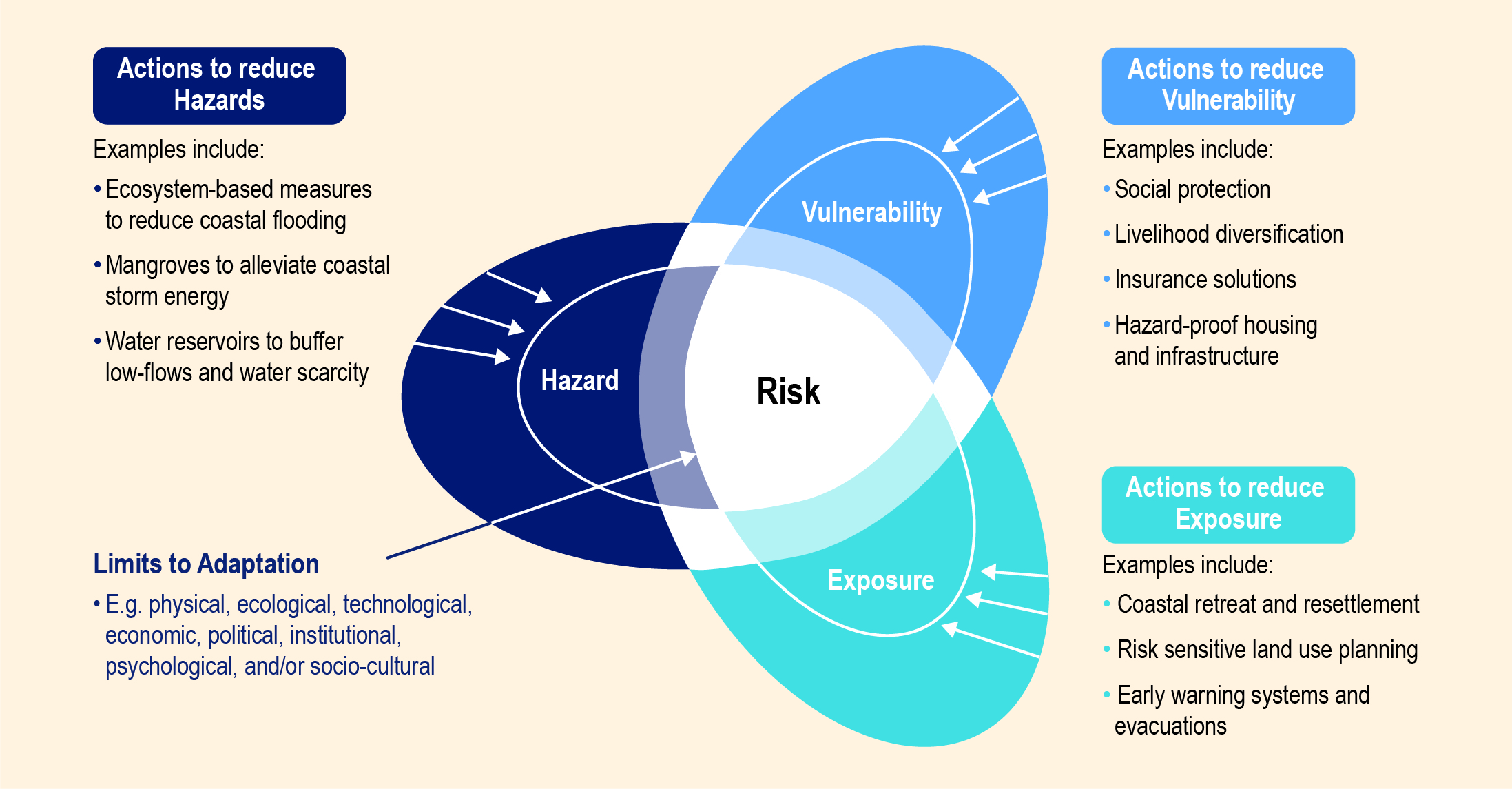
Effective drought adaptation addresses the three components of risk defined in the IPCC framework—hazard, exposure, and vulnerability—while also integrating these measures into a coherent, system‑wide response. Adaptation strategies can therefore target the physical drivers of drought, reduce how many people and assets are in harm’s way, strengthen the resilience of affected systems, and combine these efforts into an integrated approach.
Adaptation by Reducing Drought Hazards
Drought hazards cannot be prevented altogether, but certain interventions can influence hydrological and ecological processes in ways that reduce drought severity or buffer its impacts. These measures help enhance the underlying water balance and ecosystem functioning, thereby moderating the physical hazard. Key hazard‑reducing strategies
Ecosystem restoration, including wetlands and riparian areas, increases natural water retention and helps stabilize groundwater recharge. Sustainable soil and land management, such as improving infiltration and reducing runoff, increases local water availability during dry periods. Water‑storage systems—such as reservoirs, aquifer recharge, and managed storage—can reduce the impact of low‑flow periods and seasonal water scarcity.
These approaches align with the hazard-focused component of the IPCC risk framework, recognizing drought as a climate hazard influenced by shifts in precipitation and long‑term aridification trends.
Adaptation by Reducing Exposure to Drought Impacts
Exposure refers to how many people, assets, and activities are situated in areas where drought impacts can occur. Reducing exposure means strategically reorganizing where water‑dependent activities take place or how they obtain their water. Exposure‑reducing strategies
Climate‑informed land‑use planning that avoids expanding irrigated agriculture into water‑stressed river basins. Relocating crops or adjusting agricultural zones to areas less prone to drought. Diversifying water sources, such as reclaimed water, rainwater harvesting, and—where appropriate—desalination, reducing dependence on highly variable surface water. Managed retreat or transition strategies for regions facing persistent long‑term aridification or groundwater depletion.
By shifting the geographic or sectoral footprint of water‑intensive activities, these measures reduce the number of systems exposed—even when the drought hazard itself does not change.
Adaptation by Reducing Vulnerability
Vulnerability describes how sensitive systems are to drought impacts and how effectively they can respond or recover. It is shaped by environmental conditions, institutional capacity, and socioeconomic factors. Reducing vulnerability strengthens adaptive capacity and enhances resilience across landscapes and communities. Vulnerability‑reduction strategies Improving agricultural resilience
Adoption of drought‑resistant crop varieties
Conservation agriculture and soil‑organic‑matter enhancement
Efficient irrigation, such as drip systems or deficit‑irrigation strategies
Strengthening water governance Clear and adaptable water‑allocation rules for scarcity Implementation of drought management plans Transparent and accessible early‑warning systems
Socioeconomic resilience Social protection programs and livelihood diversification Insurance mechanisms that help farmers and households absorb drought shocks
By lowering vulnerability, systems can cope more effectively with drought even when hazard levels rise or exposure remains high.
Integrated Adaptation: Acting Across Hazard, Exposure, and Vulnerability
In practice, drought adaptation is most effective when strategies targeting hazard, exposure, and vulnerability are coordinated rather than applied in isolation. Integrated drought adaptation recognizes that these components interact: strengthened ecosystems can reduce hazard intensity, planning decisions reshape exposure, and capacity‑building reduces vulnerability.
Elements of integrated drought adaptation Ecosystem restoration and soil management enhance water retention and buffer physical hazards. Land‑use and urban planning determine where water‑dependent activities are located and how exposed they are. Governance, information systems, and resilient livelihoods reduce vulnerability and support long‑term adaptation planning.
Together, these measures build a more resilient landscape and society capable of withstanding the increasing frequency and severity of drought under climate change. Integrated approaches ensure that adaptation efforts reinforce one another, creating a stronger and more adaptable water‑resource system.